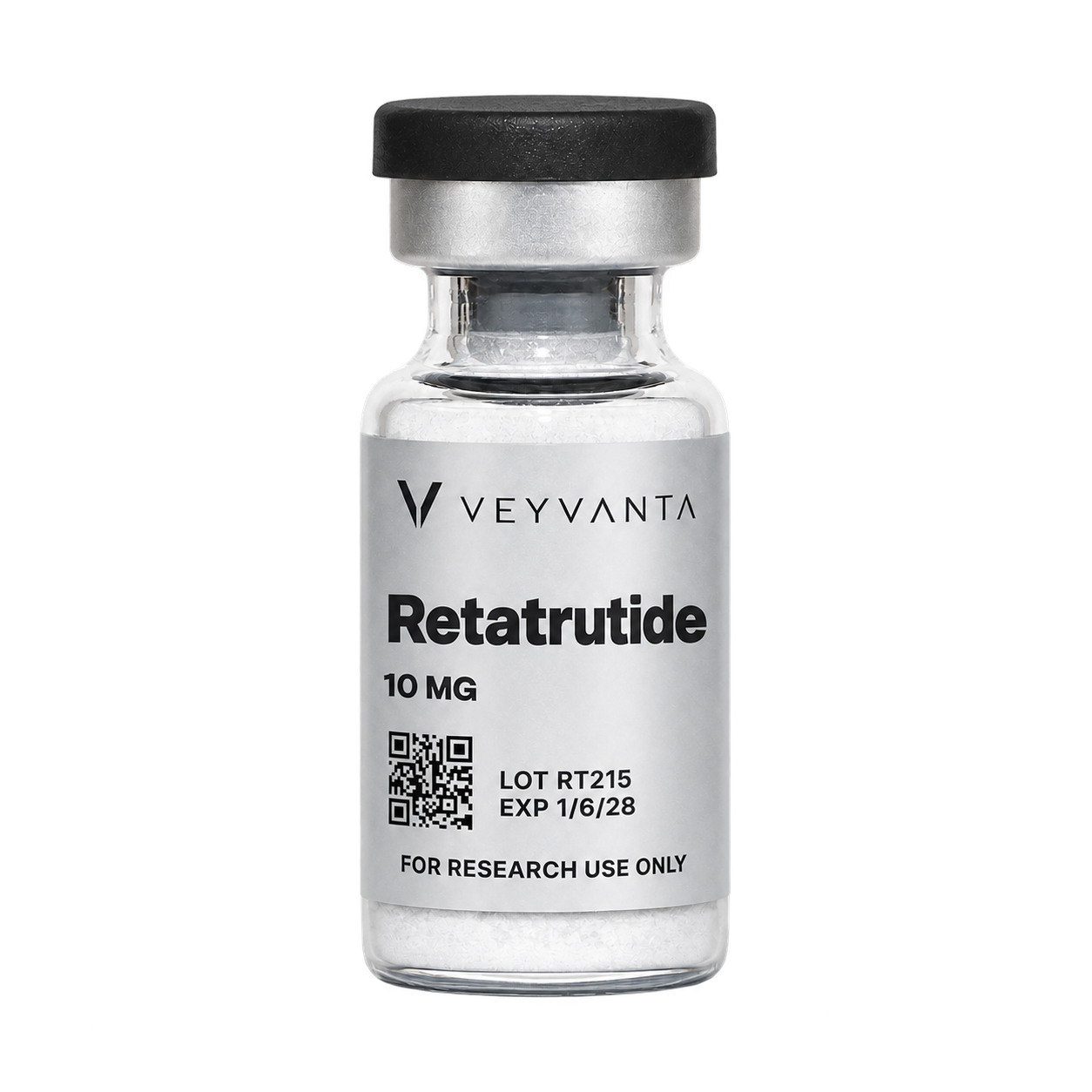
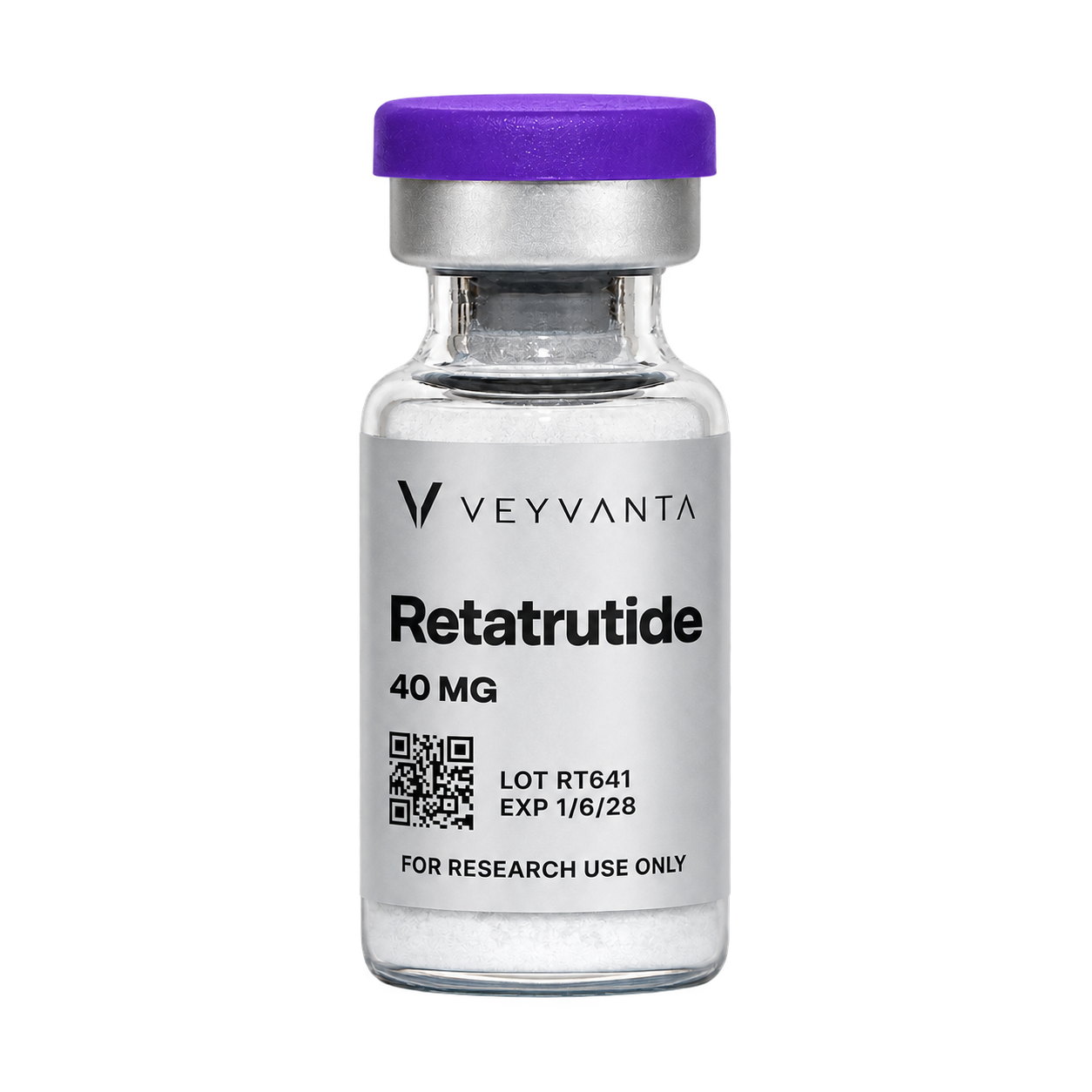
Material
Synthetic investigational peptide

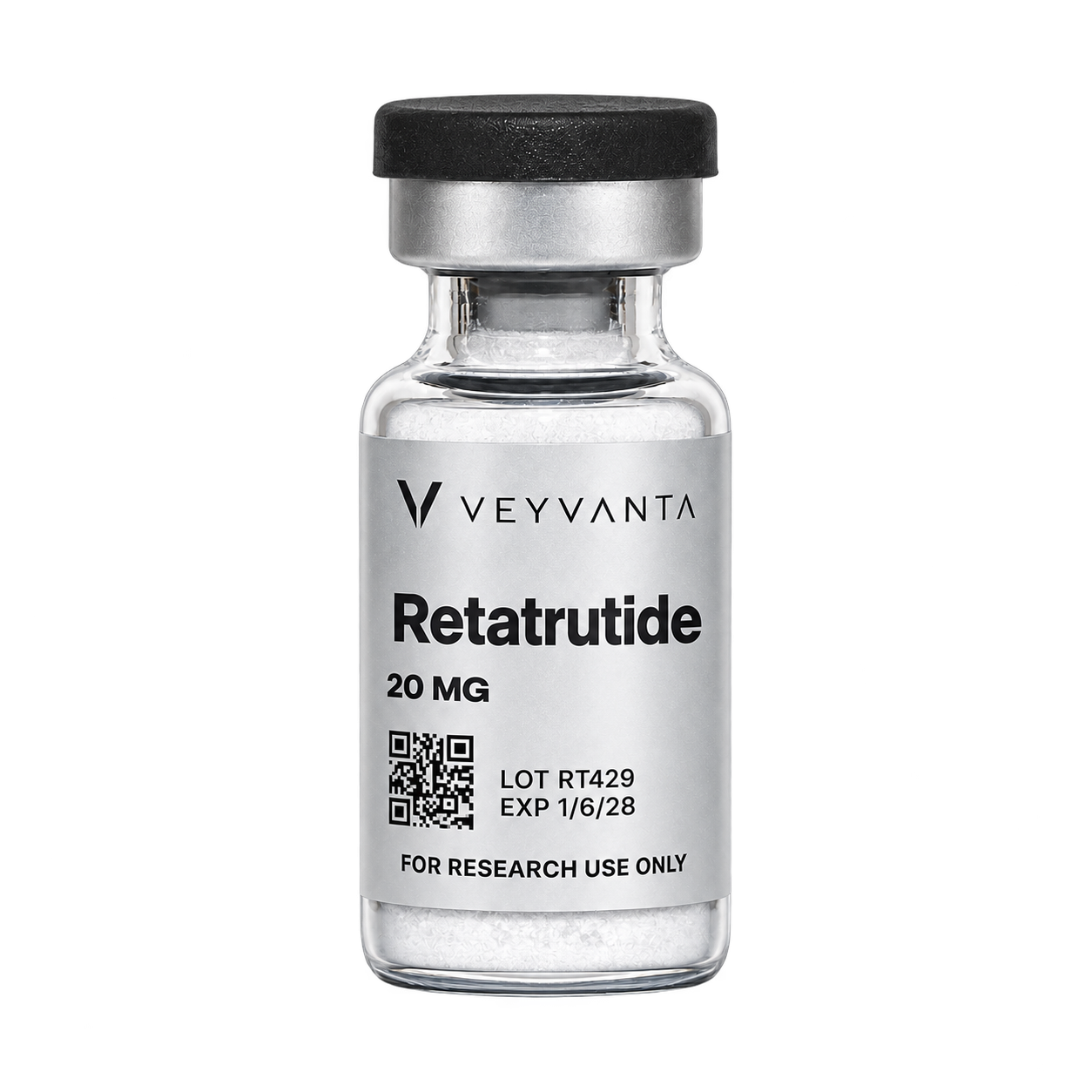
Retatrutide is an investigational GLP-1, GIP and glucagon receptor agonist studied in metabolic research.
* Vial labels may use shortened names to keep the label legible. The full material and composition are stated in this profile.
Synthetic investigational peptide
Single peptide material; salt and excipient form are batch-specific.
Multi-receptor metabolic peptide research.
Retatrutide is one of the most closely watched metabolic research peptides because one molecule engages the GIP, GLP-1, and glucagon receptor pathways.
GIP, GLP-1, and glucagon receptor signaling
Body-weight, glycemic, and broader metabolic endpoints
A source-led view of the findings reported to date, the maturity of the evidence, and the limits that matter when interpreting it.
Research now includes Phase 3 TRIUMPH results alongside earlier randomized studies of body-weight and glycemic endpoints. The TRIUMPH-1 obesity study was published in September 2026. Findings vary with the population and analysis; gastrointestinal adverse events and tolerability remain important to interpretation.
Retatrutide remains investigational despite its advancing clinical program. Findings from controlled trials of sponsor-manufactured material do not establish the identity, equivalence, safety, or performance of a research vial.
This summary describes published research on the named material or its components. It does not establish safety, efficacy, equivalence, or suitability of this Veyvanta research product for human use.
Convert a declared vial amount and diluent volume into nominal concentration, liquid volume, and the equivalent position on a U-100 scale.
Enter a positive diluent volume and target amount to calculate.
This tool performs unit conversion only. It does not recommend an amount, frequency, route, diluent, handling method, or human use. Results assume ideal mixing and a U-100 scale of 100 units per mL; validated laboratory procedures and material-specific compatibility take priority.
The product code identifies this material and declared strength. Supplier lot, expiry and analytical documentation are recorded separately when available.
Veyvanta internal batch record.
Find a label code
This permanent link opens this exact product and strength. It does not certify an individual vial.
veyvanta.com/p/RT020