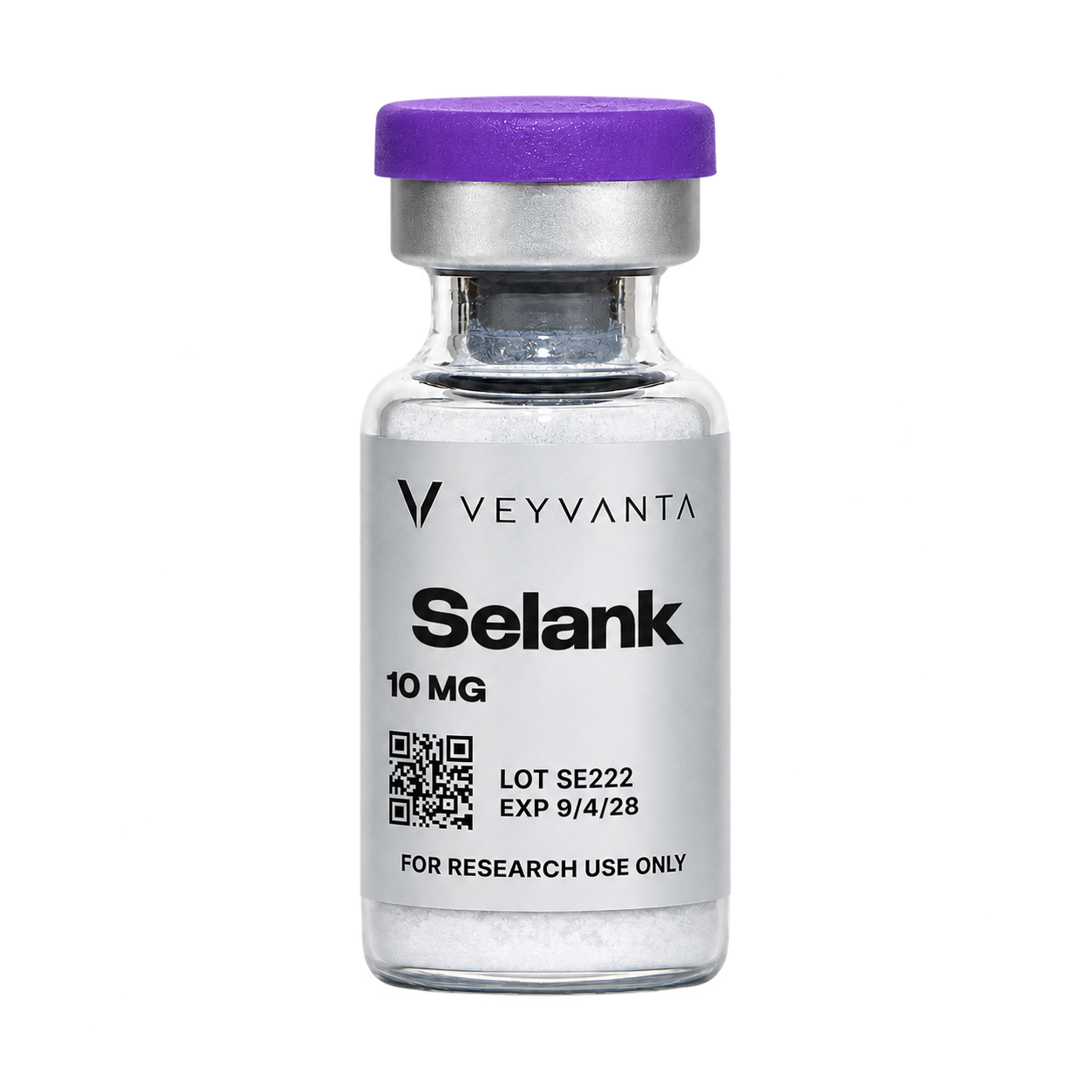
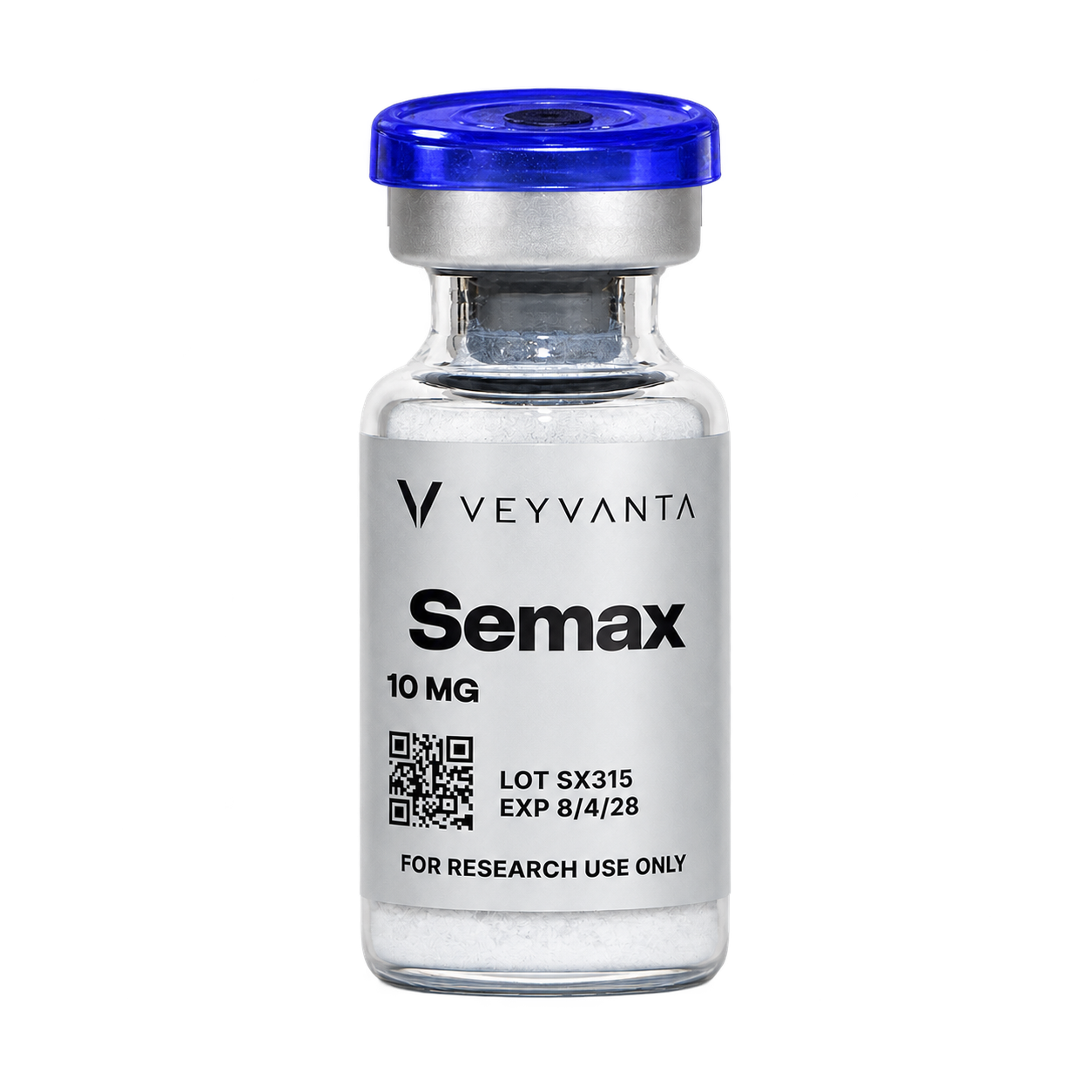
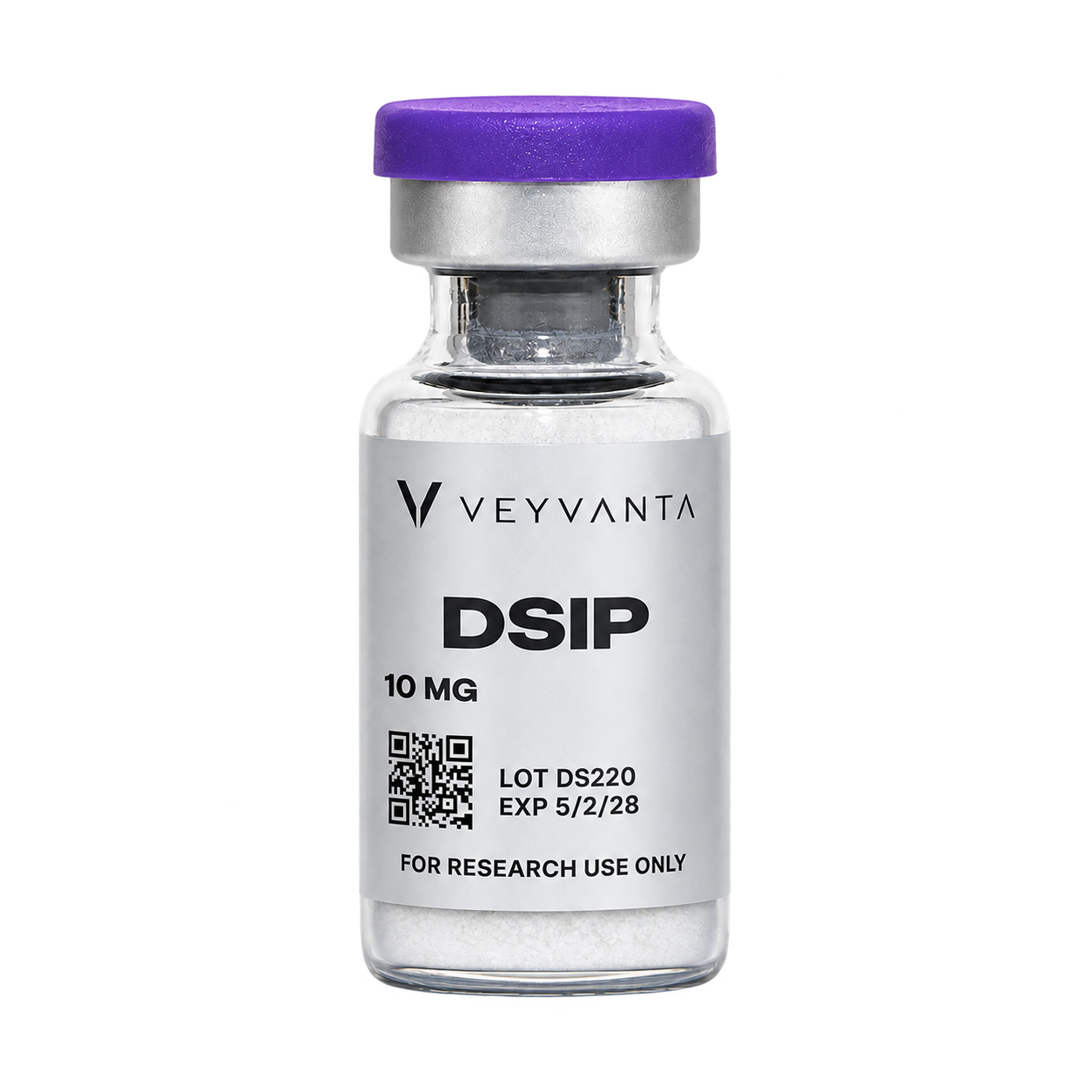
Material
Short synthetic peptide

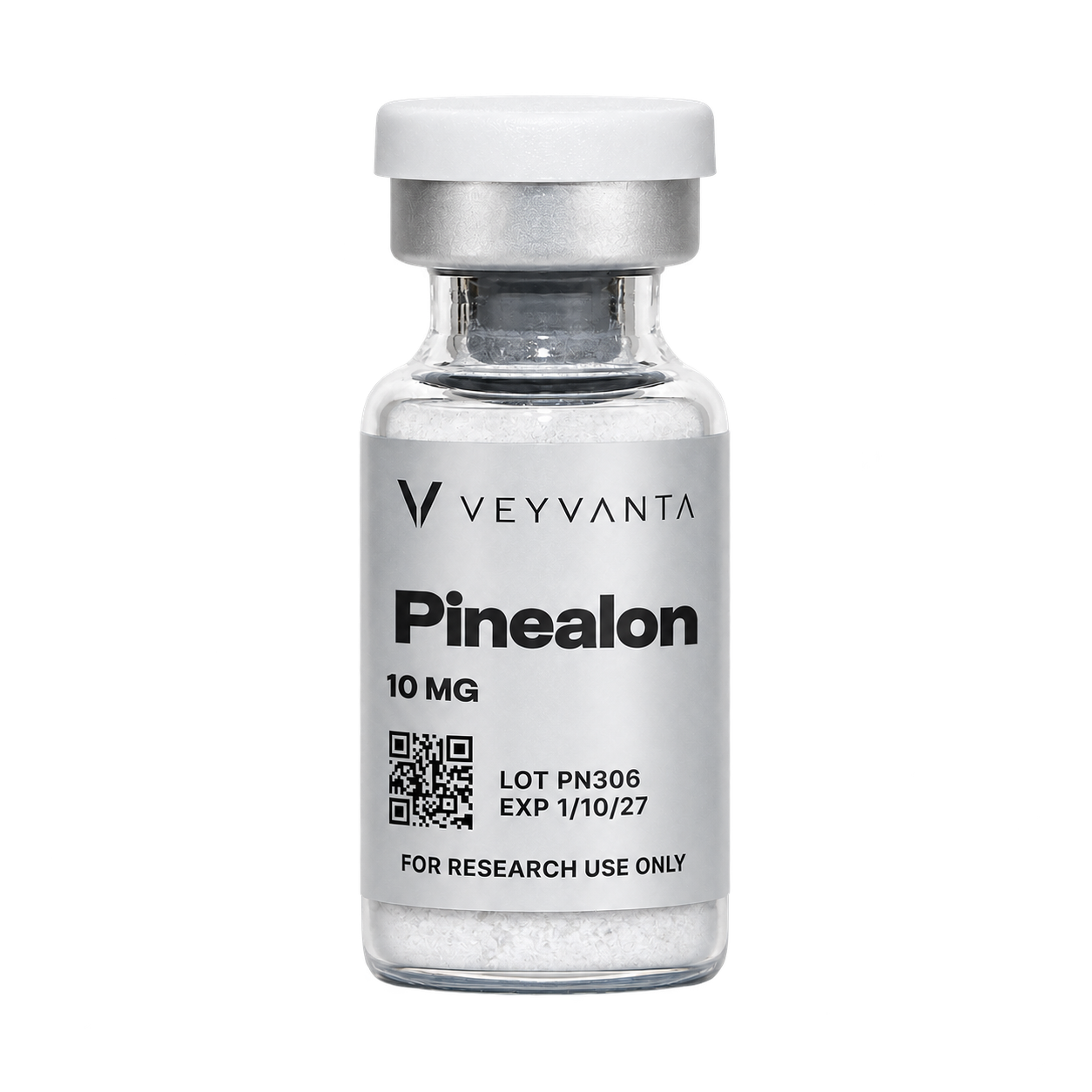
A short peptide investigated in neuronal stress and cellular-response models.
* Vial labels may use shortened names to keep the label legible. The full material and composition are stated in this profile.
Short synthetic peptide
Single peptide material.
Neuropeptide and cellular-model research.
This compact tripeptide is followed for its potential relevance to neuronal resilience, oxidative-stress signaling, and cognitive-aging models.
Neuronal stress and hypoxia models
Short-peptide neuroregulatory signaling
A source-led view of the findings reported to date, the maturity of the evidence, and the limits that matter when interpreting it.
Cell studies report lower reactive-oxygen accumulation and reduced necrotic cell death under oxidative stress. Animal models also describe greater neuronal resistance and improvements in selected learning and spatial-orientation measures.
The evidence base is limited, geographically concentrated, and predominantly preclinical. Reported mechanisms should be treated as hypotheses rather than established human effects.
This summary describes published research on the named material or its components. It does not establish safety, efficacy, equivalence, or suitability of this Veyvanta research product for human use.
Convert a declared vial amount and diluent volume into nominal concentration, liquid volume, and the equivalent position on a U-100 scale.
Enter a positive diluent volume and target amount to calculate.
This tool performs unit conversion only. It does not recommend an amount, frequency, route, diluent, handling method, or human use. Results assume ideal mixing and a U-100 scale of 100 units per mL; validated laboratory procedures and material-specific compatibility take priority.
The product code identifies this material and declared strength. Supplier lot, expiry and analytical documentation are recorded separately when available.
Veyvanta internal batch record.
Find a label code
This permanent link opens this exact product and strength. It does not certify an individual vial.
veyvanta.com/p/PN010